
From ancient masterpieces to mind-bending illusions, these are the Athens museums actually worth your time.
Athens has a problem, the good kind. With over 70 museums scattered across the city, you could spend a month here and still not see them all. Ancient sculptures, Byzantine treasures, contemporary art, and even an entire museum dedicated to optical illusions: the Greek capital is essentially an open-air museum with dozens of smaller museums tucked inside.
But here’s the thing: you probably don’t have a month. You have a few days, maybe a week if you’re lucky, and you want to make every hour count. You don’t need an exhaustive directory, but you do need someone to tell you which museums are genuinely unmissable, which ones pair well with a coffee break in a nearby square, and which hidden gem most tourists walk right past.
That’s precisely what this guide is for.
Whether you’re a first-time visitor trying to hit the highlights or a returning traveler ready to dig deeper, we’ve curated the six essential Athens museums plus one bonus pick that locals (like myself) love. We’ll tell you what to see, how long to spend, how to skip the lines, and how to connect these stops into a seamless day (or two) of exploring.
Let’s dive in.

The Athens museum cheat sheet: Skip the lines, save time & see more
A little planning goes a long way in a city with this much to see. Here’s what you need to know before you start museum-hopping.
Skip-the-line tickets are your best friend. The Acropolis Museum and National Archaeological Museum often get crowded, especially between 10am and 2pm. Booking online in advance saves you 20–30 minutes of standing in the sun, and in peak summer, that’s no small thing.
Free entry days exist; know them. Most state-run museums offer free admission on the first Sunday of the month (November through March), on March 6th (in memory of Melina Mercouri), on April 18th (International Monuments Day), on May 18th (International Museum Day), and on September’s last weekend (European Heritage Days). The Acropolis Museum also opens its doors free on Greek National Day (March 25th) and Ochi Day (October 28th). If your dates align, take advantage, but expect bigger crowds.
Consider a combo ticket. The €30 multi-site ticket covers the Acropolis and six other archaeological sites (Ancient Agora, Roman Agora, Hadrian’s Library, Olympieion, Kerameikos, and Aristotle’s Lyceum). It’s valid for five days and pays for itself if you’re visiting more than two spots.
Note: The pass doesn’t include museum entry, but it pairs perfectly with a museum-heavy itinerary.
Plan your route geographically. The Acropolis Museum and Museum of Greek Folk Art are both in Plaka/Makrigianni. The National Archaeological Museum is in Exarchia, about 25 minutes north on foot. The Benaki and Cycladic museums sit near Syntagma. Grouping by neighborhood saves you from zigzagging across the city.
How many days do you need? For a proper museum experience, two full days are ideal—one for the big two (Acropolis Museum and National Archaeological Museum) and another for a mix of smaller spots. If you’re short on time, you can visit three to four museums in a single day, but you’ll be moving fast.
Getting from the Athens airport to central museums is straightforward. Athens International Airport is about 35 km from the city center, roughly 45 minutes to an hour by car depending on the traffic. If you want to start your museum trail the moment you land, arranging an Athens Airport transfer means no hunting for taxis or navigating public transit with luggage; your driver meets you at arrivals and can drop you directly at your first stop.

The best Athens museums, ranked by experience
1. Acropolis museum
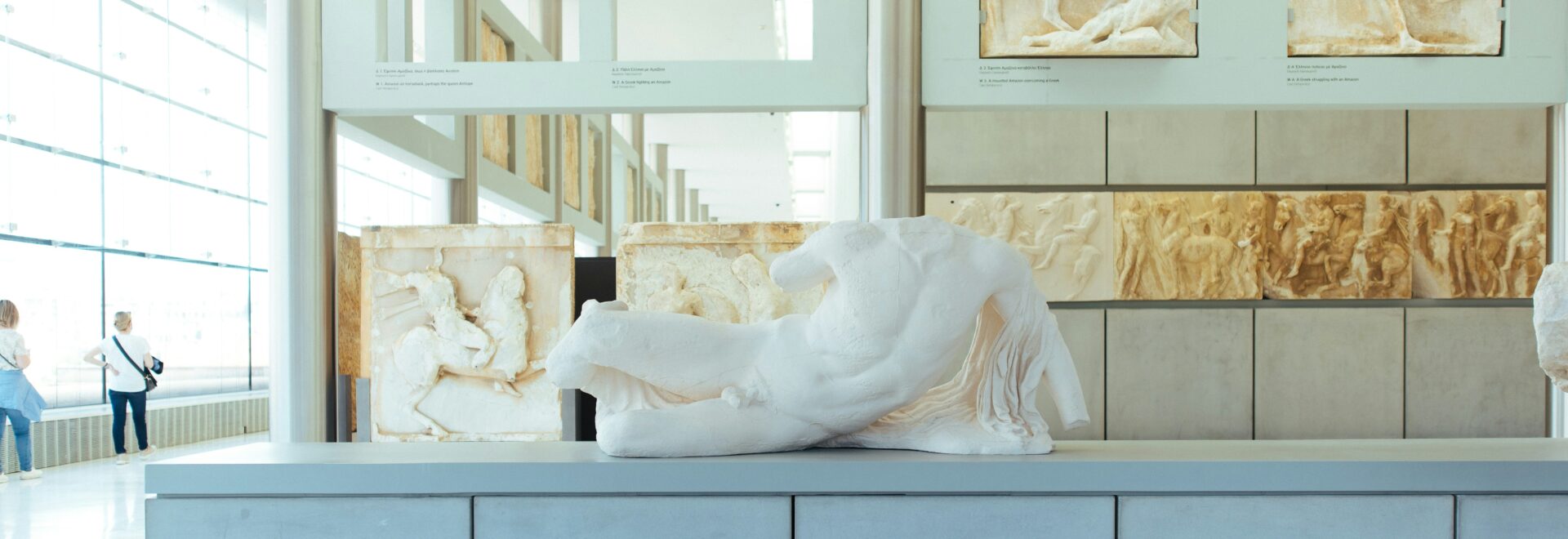
Why it belongs on the list: This is the museum that finally gave the Parthenon sculptures a home worthy of their grandeur. Opened in 2009 at the foot of the Acropolis, it’s a masterpiece of architecture in its own right, all glass, concrete, and natural light, designed to showcase 4,000 artifacts spanning the Archaic to Roman periods. If you only visit one museum in Athens, make it this one.
What to see:
The Parthenon Gallery (top floor). A glass-walled hall arranged to mirror the Parthenon itself, displaying the original frieze sculptures in their correct sequence. The missing pieces—still in the British Museum—are represented by plaster casts, making the gaps (and the ongoing repatriation debate) viscerally clear.
The Caryatids. Five of the six original maidens from the Erechtheion porch stand here in climate-controlled elegance. (The sixth remains in London.) Their serene faces and flowing robes are even more striking up close.
The Archaic Gallery. Rows of kouroi and korai, those enigmatic smiling statues from the 6th century BC, still bearing traces of their original paint. Look for the Moschophoros (Calf Bearer), one of the oldest pieces in the collection.
Practical info:
Admission: €15 (reduced €10). Free on specific national holidays.
Hours: 8am–8pm daily in summer; reduced hours in winter. Last entry 30 minutes before closing.
Duration: 2–3 hours for a thorough visit; 90 minutes if you’re moving quickly.
Insider tip: Visit late afternoon, around 5pm. The crowds thin out, the light through the glass walls turns golden, and you’ll have the Parthenon Gallery almost to yourself. The museum restaurant on the second floor has Acropolis views, perfect for a post-visit coffee.

2. National Archaeological museum
Why it belongs on the list: If the Acropolis Museum is a deep dive into one site, the National Archaeological Museum is the entire ocean. This is Greece’s largest museum and one of the world’s great archaeological collections, 11,000 objects spanning 7,000 years of history, from Neolithic figurines to Roman bronzes. It’s not flashy, it’s not modern, and that’s part of its charm: you’re walking through halls that have displayed these treasures since 1889.
What to see:
The Mask of Agamemnon. Yes, it probably wasn’t actually Agamemnon’s death mask—it predates the Trojan War king by centuries—but this gold funeral mask from Mycenae remains one of the most haunting objects in all of archaeology. You’ll find it in the Mycenaean Gallery, surrounded by gold cups, daggers, and jewelry from the shaft graves.
The Antikythera Mechanism. A 2,000-year-old astronomical calculator recovered from a shipwreck in 1901. It’s essentially an ancient analog computer, and its complexity baffled scientists for decades. The corroded fragments don’t look like much, but once you understand what they represent, it’s difficult to look away.
The Bronze Statues. The museum’s bronze collection is unrivaled. Don’t miss the Artemision Bronze (either Zeus hurling a thunderbolt or Poseidon throwing a trident—scholars still argue), the Jockey of Artemision, and the beautifully naturalistic Marathon Youth.
Practical info:
Admission: €12 (reduced €6).
Hours: 8:30am–8pm in summer; 9am–4pm in winter. Closed Mondays.
Duration: At least 3 hours; archaeology enthusiasts could easily spend half a day.
Insider tip: Start with the Mycenaean Collection on the ground floor, then work chronologically. The museum can feel overwhelming; pick two or three sections that interest you most and give them your full attention rather than rushing through everything.

3. Benaki museum of Greek culture
Why it belongs on the list: While the big two focus on ancient Greece, the Benaki tells the story of Greek culture from prehistory to the 20th century, all under one roof. Housed in a gorgeous neoclassical mansion near Syntagma Square, it’s the kind of museum where you wander from Mycenaean gold to Byzantine icons to revolutionary-era rifles, and somehow it all makes sense.
What to see:
The Gold Collection. Delicate Hellenistic jewelry, Mycenaean signet rings, and Byzantine liturgical objects—the craftsmanship across three millennia is breathtaking.
The Lord Byron Room. Personal effects of the poet who died fighting for Greek independence, including his writing desk and portable bed. A poignant window into the Romantic philhellene movement.
The Egyptian Collection. Acquired by founder Antonis Benakis during his years in Alexandria, this small but superb collection includes Fayum mummy portraits, those startlingly lifelike faces that look like they could be Instagram profile pictures from 2,000 years ago.
Practical info:
Admission: €12 (reduced €9). Free on Thursdays.
Hours: 10am–6pm (until midnight on Thursdays and Saturdays). Closed Tuesdays.
Duration: 2 hours.
Insider tip: Thursday evenings combine free entry with extended hours and a rooftop café that overlooks the National Garden. It’s one of the best-kept secrets in Athens—order a glass of wine, watch the sunset, and congratulate yourself on excellent trip planning.

4. Museum of Cycladic Art
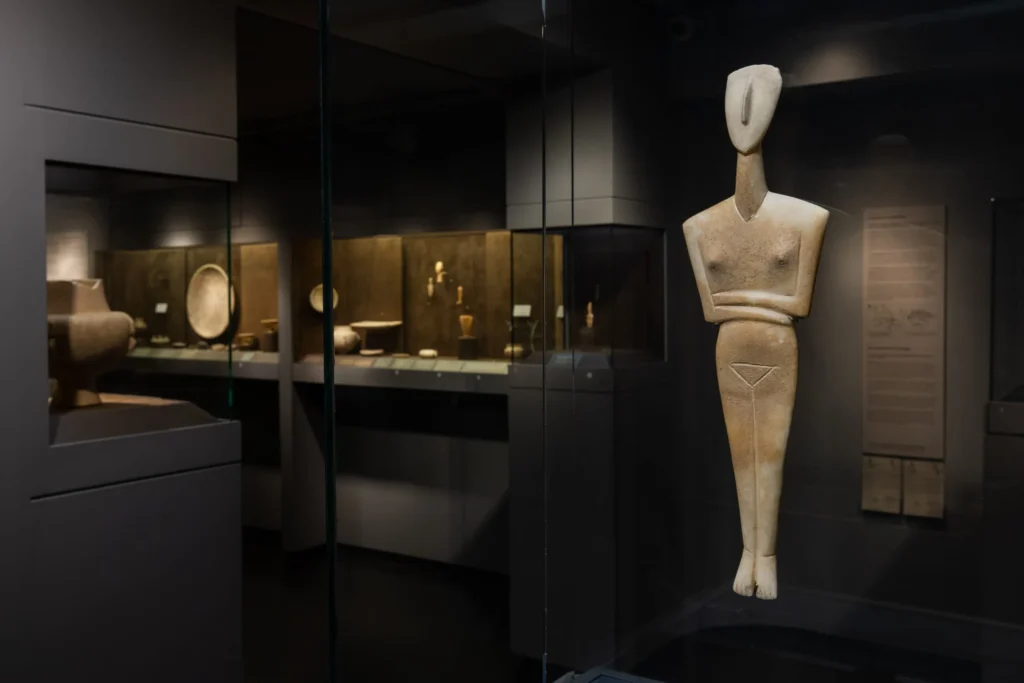
Why it belongs on the list: Those sleek, minimalist marble figurines that look like they could be Brâncuși sculptures? They’re 5,000 years old, and the Cycladic Museum has the world’s finest collection. This small, elegant museum focuses on the art of the Aegean’s Bronze Age civilizations, with a secondary wing dedicated to ancient Greek art. It’s a revelation for anyone interested in design, abstraction, or the deep roots of modernism.
What to see:
The Cycladic Figurines Gallery. Hundreds of those unmistakable white marble figures, mostly female, arms folded across the abdomen, faces reduced to a nose and nothing more. Their purpose remains mysterious (funerary offerings? fertility symbols? cult images?), which only adds to their allure.
The Scenes from Daily Life Collection. Terracotta figurines showing ancient Greeks baking bread, playing games, and caring for children—a humanizing counterpoint to the grand marble statues.
The Stathatos Mansion. The museum’s neoclassical annex hosts rotating exhibitions and connects to the main building via an underground passage lined with ancient ceramics.
Practical info:
Admission: €12 (reduced €6). Half-price on Mondays.
Hours: 10am–5pm (until 8pm on Thursdays). Closed Tuesdays.
Duration: 1.5–2 hours.
Insider tip: Pair your visit with the Benaki; they’re a 10-minute walk from each other in Kolonaki. The museum shop has some of the best-designed souvenirs in Athens, including elegant reproductions of the figurines.
Common mistakes tourists make when visiting Athens museums: What to avoid
A few lessons from travelers (and locals) who’ve done the museum circuit:
- Don’t try to do everything in one day. Museum fatigue is real. Two to three museums per day is a comfortable pace; beyond that, everything starts to blur together. Build in coffee breaks, lunch, and wandering time.
- Booking in advance. Athens draws millions of visitors a year, and the best museums in Athens fill up, especially the Acropolis Museum in July and August. Showing up without a ticket and finding a 45-minute queue in 35-degree heat is avoidable. Book online.
- Mornings are best for the big museums. The Acropolis Museum and National Archaeological Museum get crowded by midday. Arriving at opening time means shorter lines and cooler temperatures in summer. 12pm–2pm is when tour groups, cruise passengers, and families with tired toddlers all converge simultaneously. Early morning or late afternoon visits are a completely different experience.
- Comfortable shoes matter more than you think. These aren’t small galleries. You’ll cover a lot of ground, often on marble floors. Leave the stylish-but-painful options at the hotel.
- Ask about audio guides. Most major museums offer them (usually €5–7), and they add valuable context. The Acropolis Museum’s guide is particularly well-produced.
- Check for temporary exhibitions. The Benaki, Cycladic, and National Archaeological museums all host rotating shows that can be as compelling as the permanent collections. A quick website check before you go might reveal something unexpected.
- Don’t try to see everything in one museum. The National Archaeological Museum has over 11,000 objects. The Acropolis Museum spans centuries. Pick your priorities before you walk in—the Mycenaean Gallery, the bronzes, or the Parthenon Gallery—and go deep on those rather than shuffling past everything at a sprint.

5. Byzantine and Christian Museum
Why it belongs on the list: Greece didn’t end with the fall of Rome. For over a thousand years, the Byzantine Empire kept Hellenic culture alive—and this museum, set in a serene Florentine-style villa on Vasilissis Sofias Avenue, tells that story. With 25,000 artifacts spanning the 3rd to the 19th century, it’s the essential stop for anyone interested in icons, mosaics, and the bridge between antiquity and the modern Greek Orthodox world.
What to see:
The Early Christian Galleries. Fragments of church architecture, marble carvings, and some of the earliest icons ever created—including rare examples that survived the Byzantine Iconoclasm.
The Icon Collection. From tiny portable icons to monumental church panels, this is one of the richest collections of Byzantine and post-Byzantine painting anywhere. Look for works attributed to the Cretan School, which influenced El Greco.
The Reconstructed Church Interiors. Entire iconostases (altar screens) and frescoed chapel walls have been transported here, giving you the immersive experience of stepping inside a Byzantine church.
Practical info:
Admission: €8 (reduced €4).
Hours: 8:30am–4pm. Closed Mondays.
Duration: 1.5–2 hours.
Insider tip: The shaded garden courtyard is one of the most peaceful spots in central Athens—perfect for a quiet moment after the sensory richness of the galleries. There’s also a small café.

6. Museum of Illusions
Why it belongs on the list: After all those ancient artifacts, you might be ready for something entirely different. The Museum of Illusions, tucked into a pedestrian street in the heart of Athens, is pure interactive fun, a playground of optical tricks, holograms, and mind-bending installations. It’s not deep, but it’s delightfully entertaining, and it’s one of the few museums where you’re actively encouraged to take photos (and look silly doing it).
What to see:
The Vortex Tunnel. Walk through a spinning cylinder that makes you feel like you’re tilting sideways even though the floor is flat. It’s unsettling in the best way.
The Ames Room. Stand in one corner and watch your friend shrink to miniature size in the other—a classic forced-perspective trick that always works.
The Infinity Room. Mirrors, lights, and the illusion of endless space. Bring your phone; this one’s made for selfies.
Practical info:
Admission: €10 (family tickets available).
Hours: 10am–10pm daily.
Duration: 45 minutes to 1 hour.
Insider tip: This museum is right in Monastiraki, steps from Ermou Street shopping and a dozen good coffee spots. Make it a breather between heavier museum visits—grab a freddo espresso afterward at one of the nearby cafés in Psyrri.

+1 hidden gem: The Athens museum that tells the story no one else does
Why it belongs on the list: Most tourists walk right past this one, and that’s a shame. Housed in a cluster of traditional buildings near the Roman Agora, the Museum of Greek Folk Art showcases the everyday artistry of post-Byzantine Greece: embroidered costumes, painted hope chests, silverwork, shadow puppets, and room recreations from across the Greek world. It’s intimate, beautifully curated, and offers a window into Greek life that the grand archaeological museums can’t provide.
What to see:
The Karagiozis Shadow Puppets. These leather figures from the Greek shadow theater tradition are works of art in themselves: vividly painted antiheroes and sultans that have entertained Greek audiences since Ottoman times.
The Bridal Costumes. Regional wedding dresses from Crete, Macedonia, and the Aegean islands—each with its own embroidery patterns, color palette, and symbolic vocabulary. The craftsmanship is extraordinary.
The Skyrian House Recreation Center. A full room from a traditional Skyros home, complete with carved furniture, ceramics, and embroidered textiles—a glimpse into island domestic life before modernization.
Practical info:
Admission: €6 (reduced €3).
Hours: 9am–4pm. Closed Mondays.
Duration: 1–1.5 hours.
Insider tip: Combine this experience with a stroll through the Plaka neighborhood and a stop at the nearby Museum of Greek Popular Musical Instruments (free entry!) for a full immersion in Greek folk culture. End with lunch at one of the tavernas tucked into the narrow streets below the Acropolis.

+2 hidden gem: First cemetery of Athens
Why it belongs on the list: This one’s personal. After a journalism school tour years ago, I walked out of the First Cemetery with a newfound obsession: the sculptural work of Yannoulis Chalepas. What looks like a quiet resting place for Athens’ elite is actually an open-air sculpture museum; marble angels, grieving mothers, and neoclassical monuments by Greece’s greatest 19th and 20th-century sculptors line the cypress-shaded paths. It’s hauntingly beautiful, unexpectedly moving, and completely free.
What to see:
The Sleeping Maiden. Chalepas carved the statue for the grave of Sofia Afentaki in 1878, and it’s considered a masterpiece of modern Greek sculpture. A young woman lies as if dreaming, her delicate features and flowing dress rendered with almost impossible tenderness in marble. If you stand there long enough, you will forget that she is made of stone.
The Tomb of Heinrich Schliemann. The archaeologist who excavated Troy and Mycenae rests here in a temple-like mausoleum decorated with Homeric scenes. It’s appropriately dramatic for a man who chased myths for a living.
The War Memorials. Monuments to Greek soldiers from the Balkan Wars, World War I, and the Resistance—a solemn reminder of the country’s turbulent 20th century.
Practical info:
Admission: Free.
Hours: 8am–5pm daily (7:30am–7:30pm in summer).
Duration: 1–2 hours for a leisurely wander.
Insider tip: Chalepas was from Tinos—the Cycladic island famous for its marble sculptors—and I later visited his house there, which is now a small museum (a tour I strongly recommend too). But oops, that’s a story for another guide.
Athens museums for families with kids: What actually works
Not every museum in Athens is equally suitable for children. The good news: a few of them are genuinely brilliant for younger visitors.
The Museum of Illusions is the obvious first choice: interactive, hands-on, and Instagram-friendly in a way kids actually enjoy. No reading required, just touching, spinning, and gasping. The National Archaeological Museum works better than most people expect: the Egyptian collection, the bronze statues, and especially the Antikythera Mechanism (an ancient computer—try explaining that to an 8-year-old) tend to captivate younger visitors far more than a room of marble busts. The Museum of Cycladic Art runs dedicated family programs and has age-appropriate interpretation throughout.
Practical tips for families: Visit bigger museums first thing in the morning before heat and crowds set in, build in a proper lunch break (Plaka has plenty of family-friendly tavernas), and don’t try to do more than two museums in a single day with children in tow. The museum cafés at the Acropolis Museum and Benaki are genuinely good; use them as a reward.
Local Advice: What Athenians actually recommend
Ask an Athenian which museum to visit, and they’ll almost certainly say the Acropolis Museum, but they’ll add something the guidebooks don’t always mention: go late. The museum stays open until 8 p.m. in summer, and the last two hours feel completely different. Fewer crowds, cooler air, golden light through the glass walls, and the Parthenon visible on the hill above you. It’s the version of the museum that locals experience.
For the National Archaeological Museum, the local advice is to resist the urge to start at the entrance and work your way through. Instead, head straight for the Mycenaean Gallery or the bronzes, whatever excites you most, and let curiosity lead from there. The museum is large enough that you’ll discover things you weren’t looking for.
The genuinely local pick, though, tends to be the First Cemetery of Athens, which is free, almost always uncrowded, and home to some of the finest sculpture in Greece. Most tourists don’t know it exists. The ones who find it invariably say it was a highlight of their trip.
And one piece of advice that applies everywhere: factor in the cafe. The rooftop at the Benaki Museum on a Thursday evening, the restaurant terrace at the Acropolis Museum, and the garden courtyard at the Byzantine and Christian Museum are not afterthoughts. They’re part of the experience.
Frequently asked questions
Which is the best museum to see in Athens? 
The Acropolis Museum is the essential stop—it provides crucial context for the Acropolis itself and houses some of the most significant sculptures of ancient Greece. If you have time for two, add the National Archaeological Museum.
Are there any free museums in Athens?
Yes. Most state-run museums offer free entry on specific days throughout the year. The first Sunday of the month (November–March) and March 25th are the most common free days. Some smaller museums, like the Museum of Greek Popular Musical Instruments, are always free.
Is the Acropolis Museum worth visiting if you’ve already seen the Acropolis?
Yes, it’s worthy—in fact, visiting the museum enhances your understanding of the Acropolis itself. You’ll see the original sculptures and artifacts that once adorned the monuments, displayed in a way that mirrors their original positions.
How much time do you need to visit the Acropolis Museum?
Plan for 2–3 hours if you want to explore thoroughly, or 90 minutes for a quicker visit. The Parthenon Gallery on the top floor deserves at least 30 minutes on its own.
How do I avoid long queues at Athens museums?
Book tickets online in advance wherever possible. Visit early in the morning (right at opening) or late afternoon. Avoid weekends and cruise ship days if you can.
Which Athens museums are best for kids and families?
The Museum of Illusions is the obvious winner for interactive fun. The Cycladic Museum has family-friendly programs, and the National Archaeological Museum’s Egyptian and bronze collections tend to captivate younger visitors.
Can I visit multiple Athens museums in one day?
Yes, but three is a realistic maximum without feeling rushed. Plan geographically—cluster the Acropolis Museum with the Folk Art Museum (both in Plaka/Makrigianni) or pair the Benaki with the Cycladic Museum (both in Kolonaki).
What is the difference between the Acropolis Museum and the National Archaeological Museum?
The Acropolis Museum focuses specifically on artifacts from the Acropolis hill and its monuments. The National Archaeological Museum covers all of Greek history and geography—Mycenae, Santorini, Egyptian artifacts, bronzes from shipwrecks, and much more.
What is the best way to get from Athens Airport to the city center museums?
A private transfer is the most convenient if you’re arriving with luggage and want to head straight to a museum area—your driver can drop you wherever you need.
Can I visit Athens museums on the same day I arrive from the airport?
Yes, though it depends on your arrival time. Morning flights leave plenty of time for an afternoon museum visit. Consider arranging a private transfer that drops you and your luggage at your hotel, then start your museum trail from there.
What is the famous museum in Greece?
The Acropolis Museum in Athens is internationally the most recognized, but the National Archaeological Museum is Greece’s largest and arguably its most important in terms of breadth of collection.
What is the best museum in Athens for first-time visitors?
Start with the Acropolis Museum; it gives you the foundations. If you have a second day, the National Archaeological Museum fills in the rest of the picture. Together, these two cover the arc of ancient Greek civilization better than anywhere else on earth.
How far are Athens’ museums from the airport?
The city center is about 35 km from Athens International Airport, roughly 45 minutes to an hour by car, depending on traffic. The Acropolis Museum, the National Archaeological Museum, and the Benaki are all within a few minutes of each other once you’re in the center.