
Rome is like an open-air museum, a literal walk through history down every street. Here, you can see some of the most well-preserved slices of Roman architecture, from the Colosseum to the Pantheon.
But let’s say you only have a long weekend in Rome, where should you visit?
What are the top 3 historical sites in Rome, Italy? Which should you prioritize?
We’re going to break it all down in this article so you can plan your itinerary to cover some of the best historical sites in Rome and some underrated gems.
Sound good? Let’s do it.
Quick note: Timetables for all historical sites in Rome are subject to seasonal changes. It’s best to check online before you visit.
Top 3 historical sites in Rome, Italy
If you’re only in Rome for a weekend and are stuck for time, here are the three historical sites in Rome you should prioritize:
The Colosseum
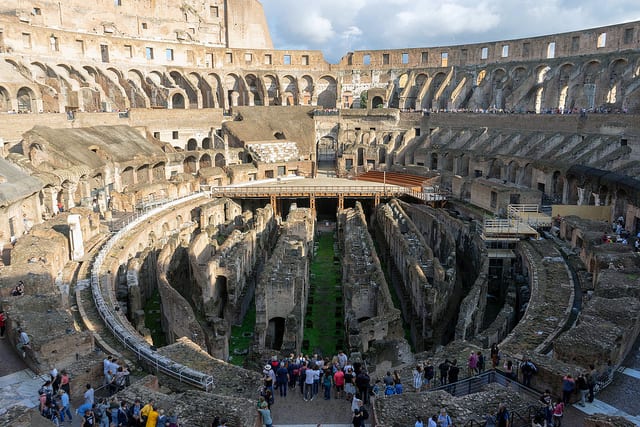
No list of historical sites in Rome would be complete without the Colosseum. This ancient amphitheater is not only one of the top historical sites in Rome, Italy, but also one of the most iconic landmarks in the world. Completed in 80 AD, it once held over 50,000 spectators who came to watch the bloody gladiator battles.
Walking through its arches today feels like stepping back into ancient Rome, imagining the roar of the crowd, the clang of armor, and the sheer spectacle of it all. Designated a UNESCO World Heritage Site, the Colosseum stands as a symbol of Rome’s enduring legacy. If you’re wondering what are some must-see historical sites in Rome, this one tops the list every time.
Opening hours: 08:30 – 19:15
Tickets: From €18 per person (Roma Pass & children’s discounts available)
The Roman Forum & Palatine Hill
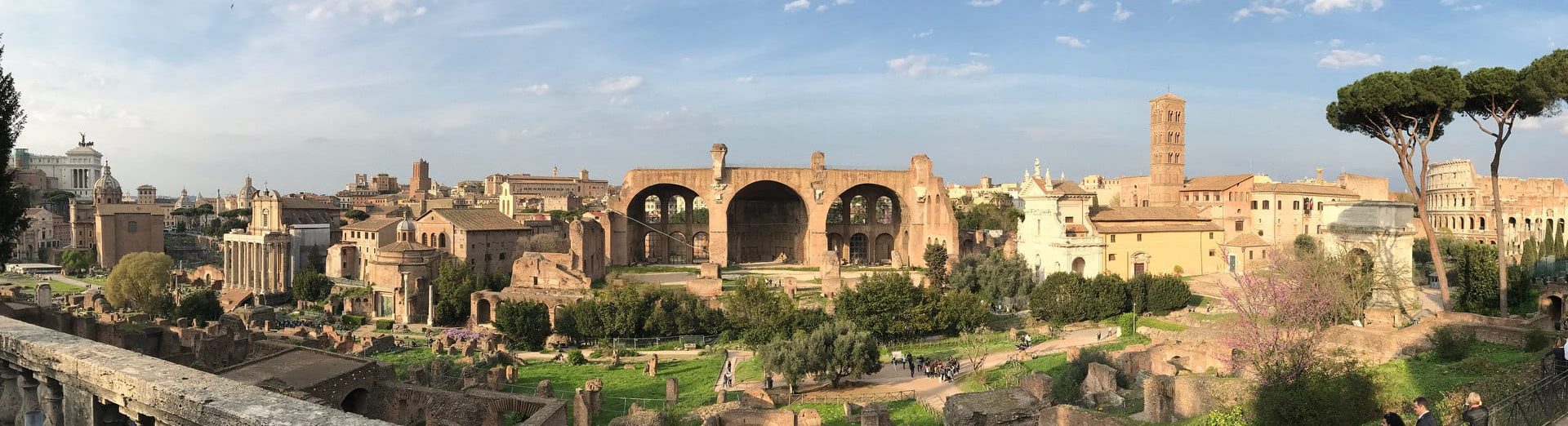
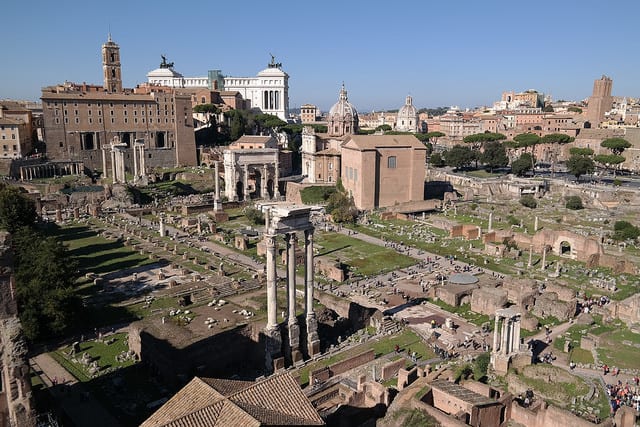
Just a short walk from the Colosseum lies the Roman Forum and Palatine Hill, once the political, religious, and social heart of ancient Rome. You can imagine all of the debates and religious ceremonies that once brought this place alive. Now, meandering through the ruins, you’ll adore the feeling of walking by columns, arches, and crumbling basilicas that have been standing for two thousand years.
Climb up to Palatine Hill for sweeping views over the Forum and the city beyond; it’s one of the best historical sites in Rome to visit at golden hour, when the city glows spectacularly.
Opening hours: 09:00 – 16:30
Tickets: From €18 per person (combined ticket with the Colosseum)
The Pantheon
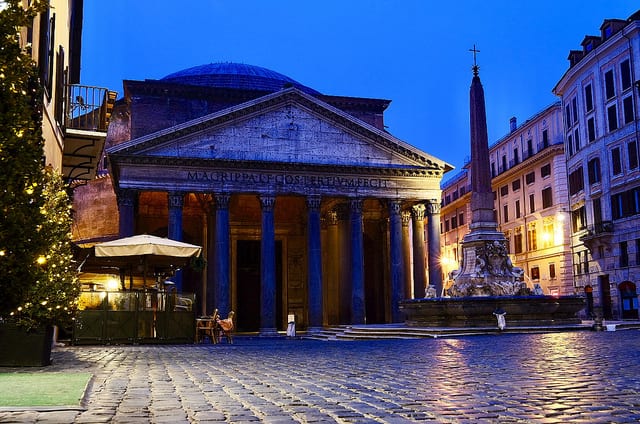
The Pantheon stands out for its incredible preservation and timeless beauty. Originally built as a temple to all the gods, it later became a Christian church, which is one of the many reasons it’s still so intact today.
Its massive concrete dome, with a perfect circular opening at the top, remains an architectural marvel nearly 2,000 years later. Step inside and you’ll see sunlight streaming through the oculus, illuminating the marble floors just as it did all those years ago. If you’re narrowing down what are the top 3 historical sites in Rome, Italy, the Pantheon absolutely deserves a spot on your list.
Tip: Wear clothing covering your shoulders, as this is still considered a sacred place of worship.
Opening hours: 09:00 – 19:00
Tickets: €5 per person
7 must-see historical sites in Rome
So now we’ve covered the top three, what are some other must-see historical sites in Rome?
Here’s our list:
Circus Maximus
Once the largest stadium in ancient Rome, the Circus Maximus was where chariot racing entertained the masses. Imagine roaring crowds filling this vast arena, cheering as horses raced at speed. Though only a grassy field remains today, you can still trace the outline of the track and feel the scale of what was once Rome’s greatest entertainment venue. Set between the Aventine and Palatine Hills, it’s an easy and scenic stop after exploring the nearby Forum.
Opening hours: 24/7 open air
Tickets: Free to enter
Baths of Caracalla
Built in the 3rd century AD, the Baths of Caracalla were once among the grandest public baths in the Roman Empire, like a luxurious wellness complex rather than a simple bathhouse. The ruins still impress with their sheer scale: towering brick walls, impressive mosaics, and vast open-air chambers where Romans gathered to bathe, exercise, and socialize. It’s surprisingly peaceful today, with gardens growing between the ancient stones. Come in the late afternoon for a wander through the quiet chambers and soak in the calm of the surroundings.
Opening hours: 09:00 – 19:00
Tickets: From €8 per person
St. Peter’s Basilica & Vatican Museums
Technically located in Vatican City, but inseparable from Rome, St. Peter’s Basilica and the Vatican Museums are masterpieces of art by themselves. Designed by Michelangelo himself, St. Peter’s awe-inspiring dome dominates the skyline, while inside, the marble and gold combine into one of the most breathtaking interiors in the world.
Next door, the Vatican Museums house centuries of art, culminating in the Sistine Chapel’s ceiling. Whether you come for the architecture, the art, or the spirituality, this corner of the city is essential to understanding Rome’s cultural legacy.
Opening hours: 07:00 – 19:10
Tickets: St Peter’s Basilica is free to enter. The Vatican Museums cost €20 per person.
The Roman Forum
Basilica di Santa Maria Maggiore
One of the four major basilicas of Rome, Santa Maria Maggiore blends early Christian history with stunning Baroque design. It’s the oldest church in Rome, built in the 5th century, and one of the most beautifully preserved. Step inside to see glittering Byzantine mosaics, marble columns, and golden ceilings that rival any royal palace. It’s quieter than St. Peter’s, offering a more intimate experience of Rome’s spiritual history. For anyone exploring beyond the obvious landmarks, this basilica is a powerful reminder of how deeply faith and art intertwine in the Eternal City.
Opening hours: 07:00 – 18:30
Tickets: Free to enter
Piazza Navona
Piazza Navona is one of Rome’s liveliest squares, filled with cafés, fountains, and street artists. But once upon a time, it was an ancient Roman stadium. Built by Emperor Domitian in the 1st century AD, it once hosted athletic games and shows. The oval shape of the piazza still mirrors the arena’s original track, while beneath its cobblestones, you can visit parts of the ancient structure. Above ground, Bernini’s Fountain of the Four Rivers and the surrounding Baroque architecture make it one of the most atmospheric spots in the city. It’s a great place to feel the heart of ancient Rome while also having a coffee with the locals.
Opening hours: 24/7 open air
Tickets: Free to enter
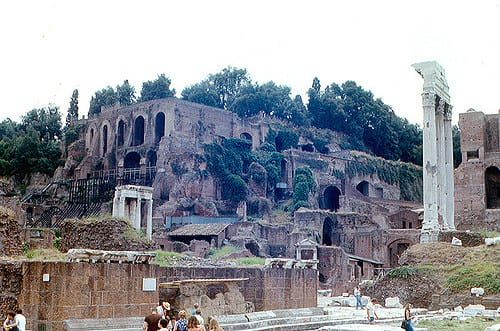
Palatine Hill was once the home of ancient nobles and aristocrats.
Castel Sant’Angelo (Hadrian’s Mausoleum)
Castel Sant’Angelo, originally known as Emperor Hadrian’s Mausoleum, has guarded Rome for nearly two thousand years. Over the centuries, it’s been a tomb, fortress, papal refuge, and even a prison. Today, it’s one of the most fascinating historical sites in Rome, offering panoramic views from its rooftop terrace. Inside, winding corridors lead past ancient tombs and Renaissance chambers, while outside, the fortress stands as a powerful symbol of the city’s resilience and reinvention through time.
Opening hours: 09:00 – 19:30
Tickets: From €21
Capitoline Hill & Museums
Capitoline Hill is one of Rome’s legendary Seven Hills. It has been a seat of power since ancient times, and still commands attention today. Designed by Michelangelo, the elegant square at its summit is home to the Capitoline Museums, the world’s oldest public museum collection. Inside, you’ll find masterpieces like the bronze Capitoline Wolf and ancient statues that once adorned the Roman Forum below. Step outside to enjoy sweeping views over the ruins—one of the best views in the city.
Opening hours: 09:30 – 19:30
Tickets: From €15
Off-the-beaten-path historical gems in Rome
We’ve explored the main archaeological and architectural marvels in this city. In this section, we’ll cover some historical sites that are lesser-known but well worth visiting!
Appian Way
Often called the “Queen of Roads,” the Appian Way is one of the oldest and most atmospheric paths in all of Italy. Stretching from Rome to Brindisi, this ancient road once carried legions, merchants, and pilgrims across the empire. Today, it’s a peaceful escape from the city’s bustle, lined with crumbling tombs, pine trees, and ruins. Rent a bike or take a long walk along its cobblestones for a unique slice of history. Few places capture the feeling of ancient Rome quite like the Via Appia Antica, so it’s well worth a visit!
Opening hours: 24/7 open-air
Tickets: Free to enter
Catacombs of San Sebastiano or San Callisto
Hidden beneath the Appian Way, the Catacombs of San Sebastiano and San Callisto offer a glimpse into early Christian Rome. These underground burial networks stretch for miles, lined with ancient tombs that date back to the 2nd century AD. Walking through the tunnels is both eerie and humbling when you understand the history of Christians meeting here in secret.
Far from the crowds of the city center, the catacombs reveal a more intimate, spiritual side of Rome’s past and are among the most fascinating historical sites to visit in Rome off the beaten path.
Opening hours: 09:15 – 17:15
Tickets: From €10
Ostia Antica
Ostia Antica feels like a historical secret. It’s a short train ride away from Rome and is often compared to Pompeii, but without the crowds. You can wander through ancient streets, peek into old taverns and bathhouses, and even step inside a Roman theater that still hosts performances today. If you want to see Roman life frozen in time, and you have an afternoon to spare on your vacation in Rome, Ostia Antica could be a good destination for you.
Opening hours: 08:00 – 19:00
Tickets: From €18
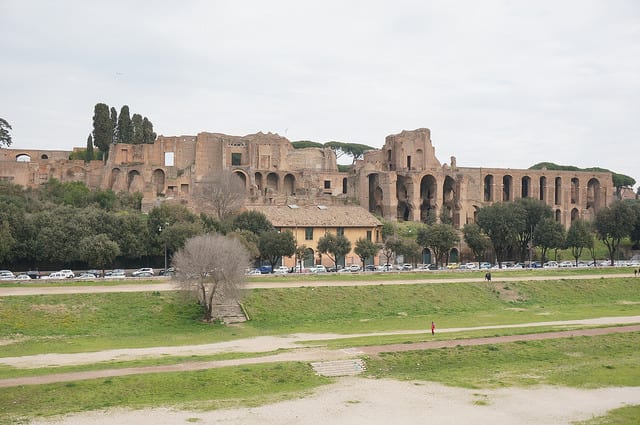
The Circus Maximus is now an open-air park for visitors to appreciate this historic racing track.
How to plan your visits to the best historical sites in Rome
Here are a few practical tips that can make your time exploring Rome’s historical sites even smoother:
- Go early or late: Visit the Colosseum and Vatican Museums first thing in the morning to avoid long queues, and head to the Roman Forum around sunset for spectacular views and softer light.
- Book ahead: Skip-the-line or combo tickets can save hours. Guided tours are worth it if you want more historical context.
- Dress respectfully: Shoulders and knees must be covered when entering churches or religious sites like St. Peter’s Basilica.
- Secure transport in advance: Make it easier to get around the city by booking a tour with Welcome Pickups or arranging your Rome Airport transfer in advance.
FAQs
What is the most historic place in Rome?
The Colosseum is widely considered the most historic place in Rome. As the largest ancient amphitheater ever built, it symbolizes the power and architectural brilliance of the Roman Empire.
What are the seven unique places to experience in Rome?
The top seven unique places to experience in Rome are Colosseum, Roman Forum, Pantheon, St. Peter’s Basilica, Vatican Museums, Castel Sant’Angelo, and Capitoline Hill.
What are the top five tourist attractions in Rome?
The Colosseum, Roman Forum, Pantheon, Sistine Chapel, and St. Peter’s Basilica are among the top 5 historical sites in Rome.
What is the oldest site in Rome?
The Roman Forum is one of the oldest archaeological areas in the city, dating back to the 7th century BC. It was the original center of Roman public life.