Spain is a country that knows how to celebrate life; from firelit nights to ancient traditions and wild street parties, its festivals are an unforgettable doorway into Spanish culture. Every region has its own unique way of honoring history, faith, and community, and the result is a calendar packed with vibrant events that draw visitors from around the world.
Whether you are seeking emotional religious processions, chaotic tomato battles, or late nights filled with music and dance, these are some of the best cultural and historical events in Spain that are worth planning for.

Semana Santa in Andalusia
Semana Santa or Holy Week is one of Spain’s most moving religious traditions. Stretching across seven days, it features solemn processions organized by local brotherhoods, and each procession carries intricate wooden floats that represent scenes from the Passion of Christ. Semana Santa’s traditions are rooted in centuries of history, making it one of the most important events in Spain history.
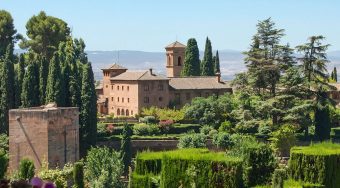
Each city in Spain brings its own character to Semana Santa, shaping the way the traditions are observed. In Seville, the processions are especially moving and filled with charm, often marked by spontaneous saetas, heartfelt flamenco prayers sung from balconies as the floats pass. Malaga stands out for its impressive religious floats and the historic custom of granting freedom to a prisoner during the celebrations. Meanwhile, Granada offers a breathtaking backdrop, as its processions wind their way beneath the majestic Alhambra.
When: The entire week before Catholic Easter Sunday
Where: Malaga, Seville, Granada
Tip: For the most unforgettable experience, watch the processions that take place overnight from Holy Thursday into Good Friday, known as La Madrugá.
La Tomatina in Buñol
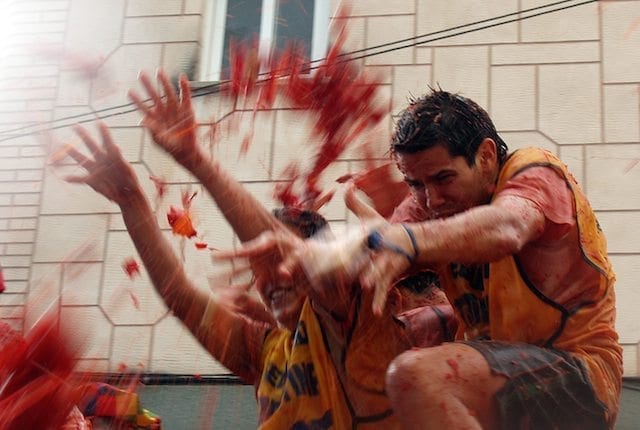
La Tomatina may be Spain’s most unusual event. It is a massive, friendly battle where over 20,000 people throw overripe tomatoes at each other for pure fun. The festival began back in 1945 when a group of teenagers started throwing tomatoes at each other during a parade in the town, but it has grown into one of the most unique celebrations in Spain.
There’s no standard outfit, but the classic look is a white t-shirt. Things will get messy, so definitely don’t wear anything new or expensive. Also, it’s a good idea to bring goggles to protect your eyes. Although the atmosphere seems pure chaos, there are rules to follow for safety, so make sure to follow the instructions provided by the personnel. Tickets sell out quickly, so book yours at least a few months in advance through the official website.
La Tomatina is a reason to visit Valencia on its own, so if you’re short on time, check out the best way to get from Valencia Airport to the city to save time on the day of the festival.
When: Last Wednesday of August
Where: Buñol, near Valencia
Tip: Tickets sell out quickly, so book yours at least a few months in advance through the official website.

San Fermín in Pamplona
The Pamplona Bull Run or El Encierro during the Festival of San Fermin is one of Spain’s most famous traditions. However, there is much more to the festival than the bulls. With historical roots in the Navarra region that date back to 1186, the Festival of San Fermin is one of the oldest and most important historical events in Spain. It was originally celebrated in October in honor of the patron saint of the city, San Fermin, and it was in 1591 that the celebrations were moved to July, which still holds today.
Each morning during the week of San Fermín, bulls run through the narrow streets of the city while daring participants run ahead of them. While this is the main attraction, the festival also offers parades, traditional dances, regional music, and evening fireworks.
When: July 6th to July 14th
Where: Pamplona, Navarra
Tip: If you want to see the run safely, book a balcony view or watch from designated areas behind barriers.

Las Fallas in Valencia
Las Fallas is a spectacular combination of creativity and fire, and one of the most popular cultural events in Spain. The first documented Las Fallas celebration took place in 1784 and has become more popular each year. Artisans from each neighborhood in Valencia build ninots, satirical figures that are grouped into massive fallas, elaborate structures of wood and papier-maché that can reach heights of up to 15 meters. The fallas are displayed in the streets for an entire week of celebrations, and there’s a contest for the best creation.
There are multiple celebrations during Las Fallas week, like La Mascleta, a display of firecrackers on Plaza de L’Ajuntament every day at 2 P.M., and La Ofrenda, when the huge statue of Virgen de los Desamparados is decorated with flowers. However, the highlight is La Cremà on the final night of the festival; all of the sculptures are burned in giant bonfires that light up the city, except for the winning sculpture, which is stored in Las Fallas Museum.
When: Mid-March
Where: Valencia
Tip: After attending the festival, pay a visit to Las Fallas Museum to learn more about the evolution of the city-wide celebration.
Feria de Abril in Seville
The Feria de Abril captures the joyful spirit of Andalusia. It started as a livestock fair in 1847 and has grown into a week-long celebration of Andalusian culture, making it one of the major events in Spain. For one week, Seville becomes a bright celebration of music, dancing, and tradition.
The festival spans over 450,000 square meters and features more than 1,000 casetas. There are tents where locals gather to dance sevillanas, enjoy tapas, and socialize. Some tents are privately owned by local groups, while others are public and set up by the local government, offering free access to everyone. During the day, horse-drawn carriages and riders in traditional dress parade through the fairgrounds. At night, the fair becomes a sea of lanterns and music, and you can enjoy as many rebujitos as you want; it’s the most typical drink at the Seville Spring Fair, a mix of sherry and a soft drink like lemonade or lemon soda.
When: Two weeks after Catholic Easter
Where: Seville
Tip: Try to visit both during the day and late at night to experience different sides of the festival.
La Batalla del Vino in Haro
The Haro Wine Festival is one of Spain’s most joyful and spirited celebrations. Known locally as La Batalla del Vino, or the Wine Battle, it begins with a pilgrimage to the cliffs of Bilibio, followed by a mass. Afterward, the real excitement starts as participants splash, pour, and spray red wine at one another using bottles, buckets, and even water guns. By the end, everyone is soaked in Rioja wine, and laughter fills the streets. The festival continues with traditional music, dancing, and of course, excellent local food and wine.
When: June 29th
Where: Haro, La Rioja
Tip: Wear white clothing so you can proudly display your wine-stained souvenir of the day, and bring a change of clothes if you plan to stay for the rest of the celebrations in town.
Frequently asked questions
What are some popular events in Spain? 
Some of the most popular Spain’s historical events are Semana Santa in Andalusia, La Tomatina in Buñol, and San Fermín in Pamplona.
What is Spain’s biggest festival?
There is not one but several cultural celebrations and major historical events in Spain. Some of the biggest and most famous Spain events are Semana Santa in Andalusia, La Tomatina in Buñol, San Fermín in Pamplona, and Feria de Abril in Seville.
What is Spain famous for?
Spain is a favorite European destination, known for its rich culture, amazing food, impressive architecture, and much more. It’s also home to multiple festivals throughout the year, so make sure to search for Spain current events before booking your trip.
What are some unique Spanish festivals?
Some of the most unique Spanish Festivals are La Tomatina, a tomato fight that takes place in the streets of Buñol, Las Fallas, with the impressive massive sculptures that fill the streets of Valencia, and the Bull Run during the San Fermin celebrations in Pamplona, where bulls run through the narrow streets of the city while daring participants run ahead of them.